10 legendary trains to ride once in your life

By Alexandre, fondateur d’Evadan
Published on
Reading time: 14 min
From the Orient Express to the Shinkansen, ten legendary trains ranked, with prices, the best season and where to book.
Some journeys matter more than the destination. The train is the only way to travel that offers this on a grand scale: hours of landscape rolling past at eye level, a cabin that turns into a bedroom, dinner while the world changes colour outside. A few trains have become legends in their own right. We chose ten of them, on five continents, from the rolling palace to the ticket under €100. Ranked by what they leave in your memory.
1. Venice Simplon-Orient-Express, Paris – Venice
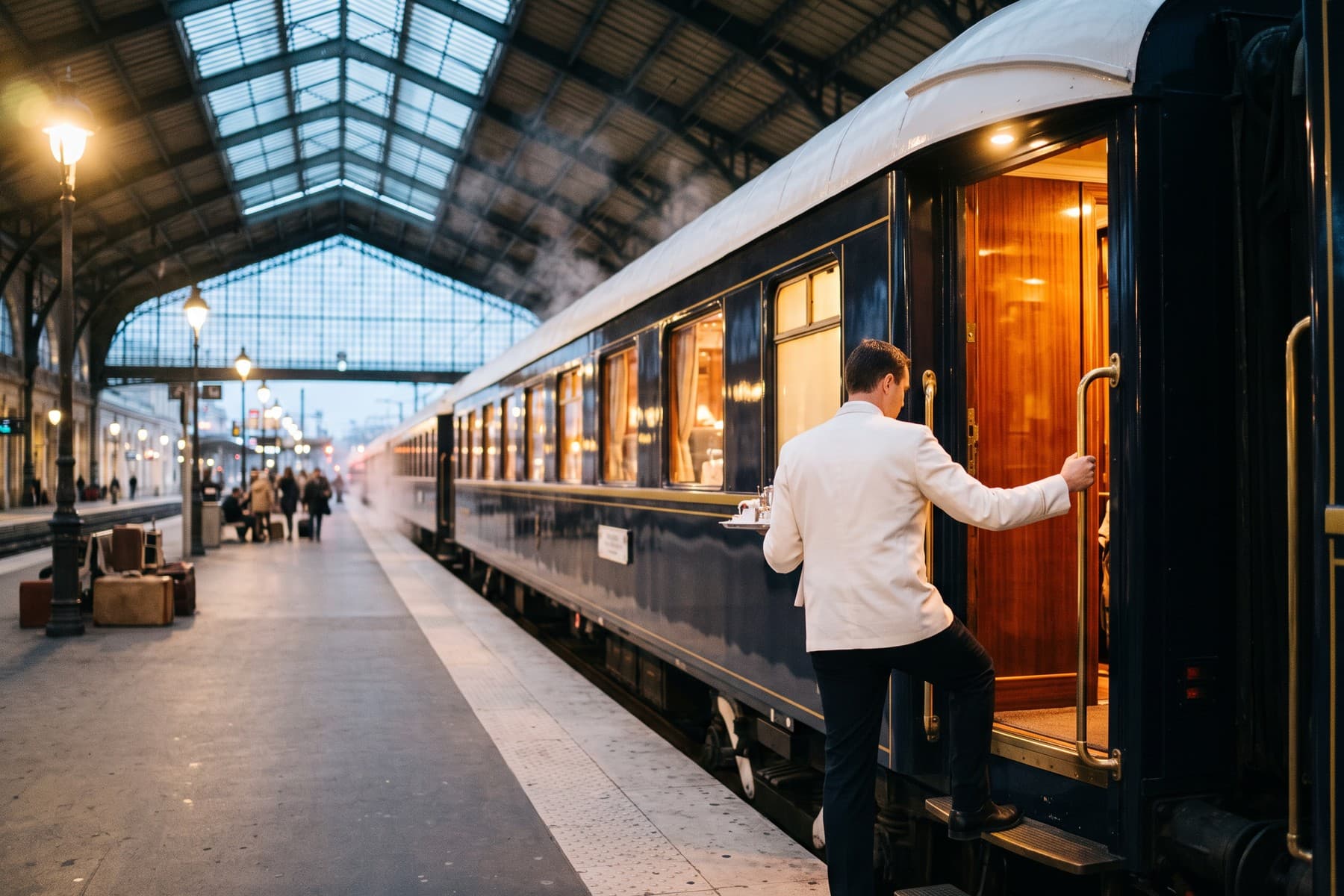
The legend. This is the train that invented luxury rail travel as we picture it: midnight-blue sleeping cars from the 1920s, marquetry, polished brass, a bar car with a pianist, dinner in evening dress while night falls over Burgundy. You wake up with the Swiss Alps at the end of the corridor, then the Dolomites, then the lagoon. You arrive in Venice the way people did a century ago: by water, slowly.
On board. Thirty-two historic cabins of 3.3 m², sixteen suites, six Grand Suites and, recently, the 31 m² L’Observatoire suite. All meals are included, prepared in three restaurant cars, with the sommelier’s wines. Bar car 3674 stays open late.
Good to know
Duration: 1 night, departing Paris Gare de l’Est in the late afternoon, arriving at Venice Santa Lucia the next afternoon.
Season: March to November.
Indicative price: from £3,885 per person in a historic cabin on 2026 departures (Venice – Paris direction), and from €4,510 on 2027 departures. Count on at least double for a suite.
Which class: the Historic cabin is the original experience, a banquette the steward turns into beds during dinner, a washbasin in the cabin, toilets at the end of the car and no shower. The Suites and Grand Suites add a private bathroom with shower, at a very different price; for one night, the Historic cabin is enough for the dream.
To picture it: Seat61’s detailed account, cabin by cabin
2. The Canadian, Toronto – Vancouver
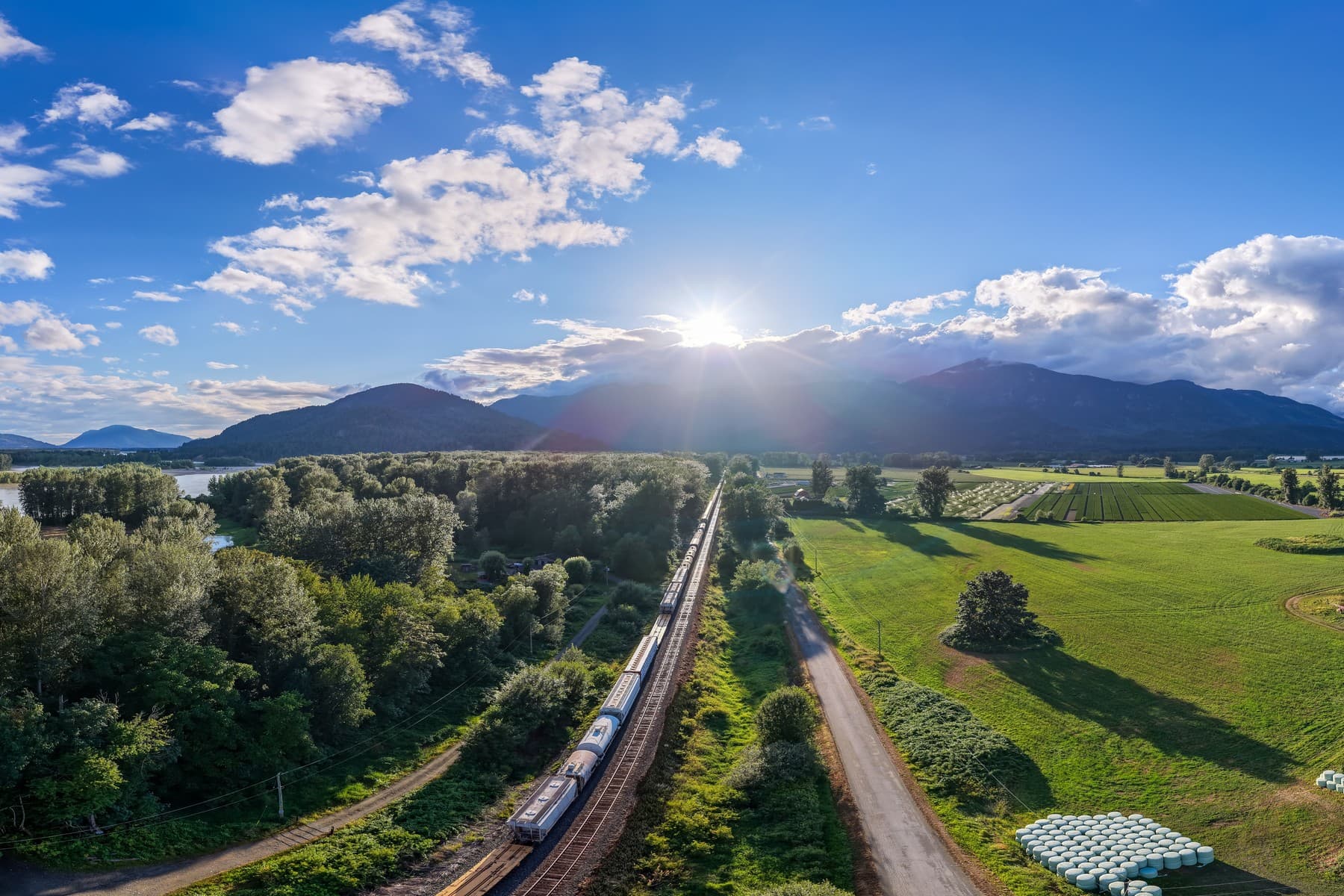
The legend. Four nights, 4,466 km, an entire country from east to west. VIA Rail’s Canadian still runs with its stainless-steel cars built by Budd in 1955, panoramic domes included. You leave the lakes and forests of the Canadian Shield, cross the Prairies as far as the eye can see, then the Rockies rise before Jasper, ahead of the Fraser Canyon and the ocean. It is the journey you take to understand what “big” means.
On board. The Skyline cars have a glass dome where everyone takes a turn to sit. At the very back, the Park car combines a rounded lounge, a dome and a bar. Three ways to travel: Economy (reclining seat), Sleeper Plus (berths or cabins, meals and shower included) and Prestige (double bed, private shower, minibar, meals and drinks included, reserved access to the Park car).
Good to know
Duration: 4 nights. Two departures a week, Wednesday and Sunday from Toronto, Monday and Friday from Vancouver.
Season: May to October for the scenery and the long evenings; winter is quieter, snowy, and noticeably cheaper.
Indicative price (per person, one way, official fare): Economy from CA$514; Sleeper Plus cabin for two from CA$1,960 in winter and CA$3,241 in summer; Prestige from CA$6,040 in winter and CA$7,592 in summer.
Which class: not Economy, where you sleep sitting up for four nights. The Sleeper Plus cabin for two has its two beds, a private washbasin and toilet, the shower at the end of the car, all meals included and access to the panoramic cars. Prestige adds a double bed, a private shower, a big picture window and a concierge, for considerably more.
To picture it: Seat61, Toronto – Vancouver by train
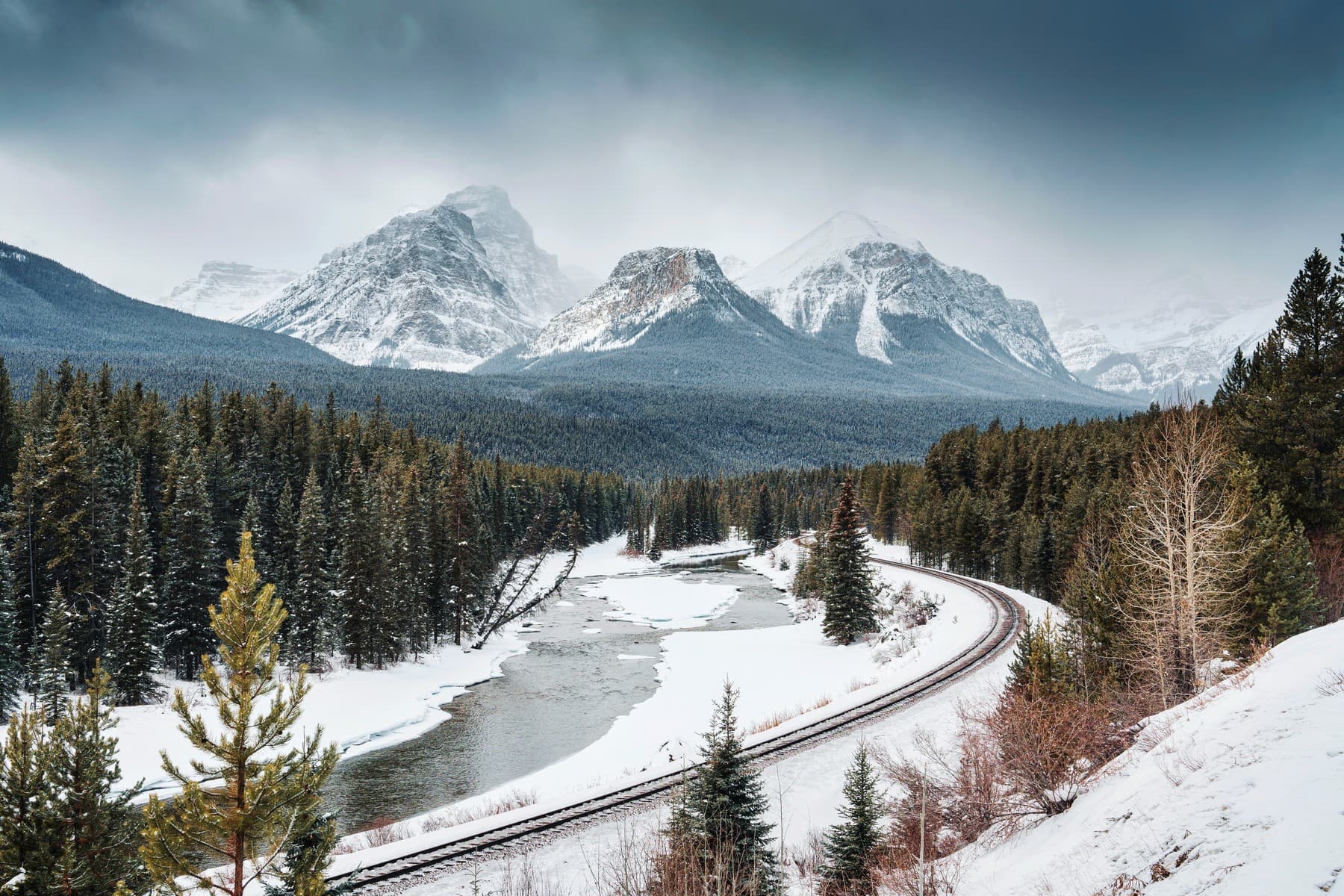
3. Glacier Express, Zermatt – St. Moritz
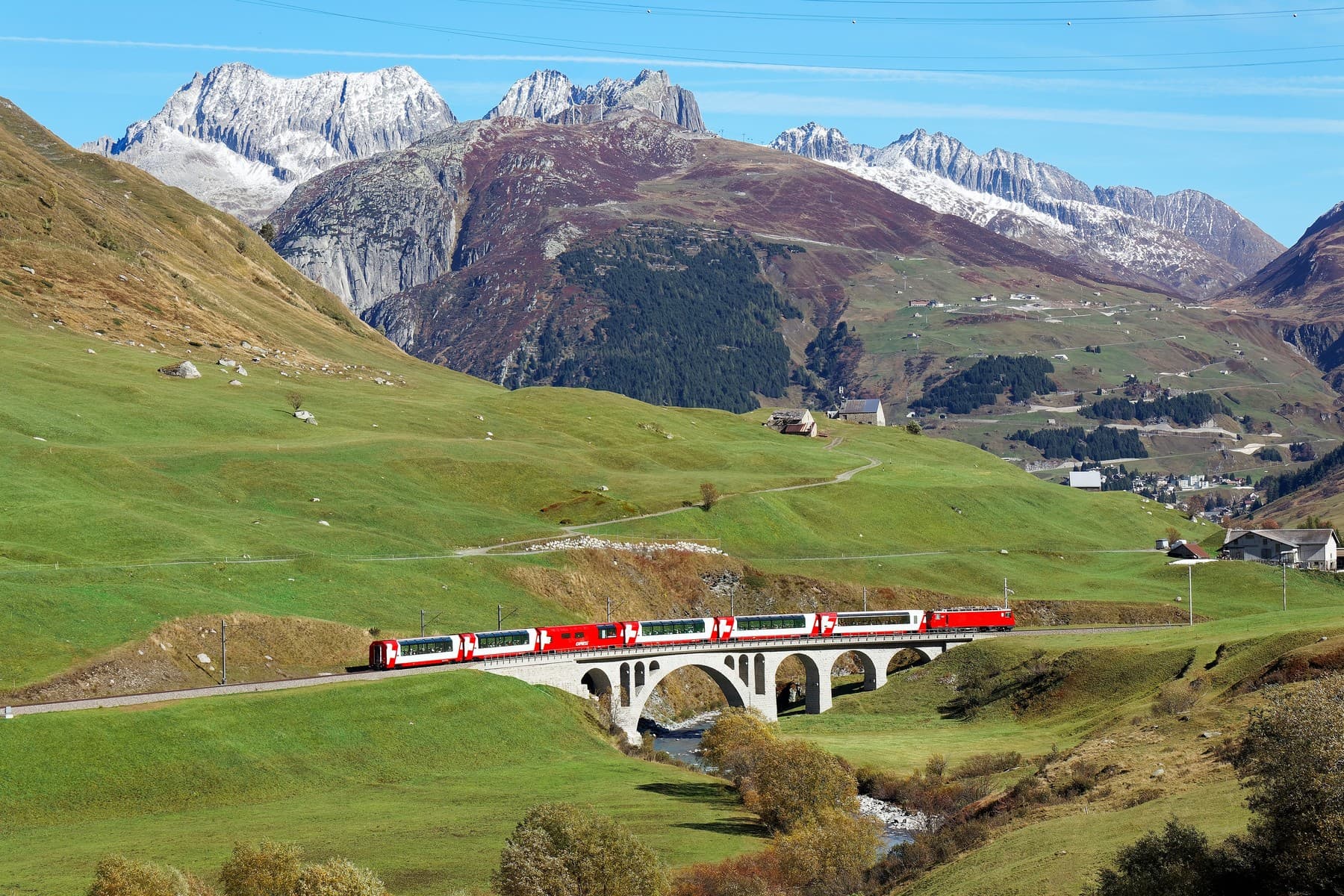
The legend. “The slowest express train in the world”: 291 km in eight hours, 291 bridges, 91 tunnels, a pass at 2,033 m (the Oberalp) and the Landwasser Viaduct, that 65 m high curve of stone that drives straight into the mountain. You set off at the foot of the Matterhorn, you arrive among the lakes of the Engadine, and in between you never let go of the window.
On board. Panoramic cars glazed up to the ceiling, a hot meal served at your seat. Excellence Class adds a guaranteed window seat, a concierge, an aperitif, champagne and a five-course menu paired with wines.
Good to know
Duration: about 8 hours, in either direction.
Season: all year, except an autumn break (11 October to 4 December in 2026). Winter under the snow is as beautiful as summer.
Indicative price (2026, one way): 2nd class CHF 159 + CHF 54 reservation; 1st class CHF 272 + CHF 54; Excellence Class CHF 540 reservation, on top of a 1st class ticket, everything on board included. A Swiss Travel Pass or a Half Fare Card covers the ticket; the reservation remains.
Which class: the panoramic windows are the same in 2nd and 1st; 1st class has two-plus-one seating, so more space and an almost guaranteed window seat, for CHF 272 instead of 159, reservation extra. Excellence Class adds the guaranteed window seat, lunch, the bar and a concierge: a treat more than a need.
Book: glacierexpress.ch and the price page
4. Rovos Rail, Pretoria – Cape Town
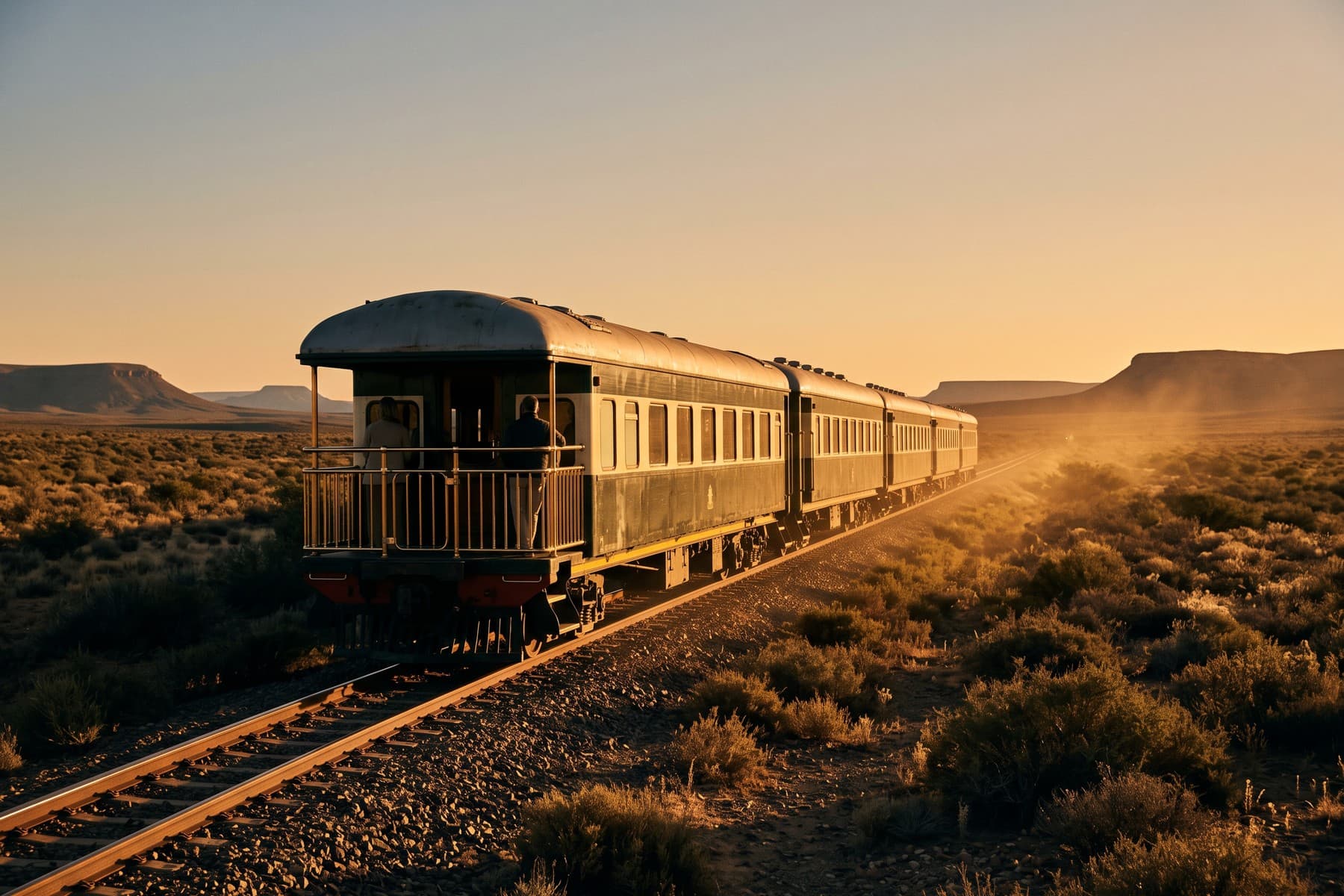
The legend. Rovos Rail calls itself “Pride of Africa”, and it is not exaggerating. Restored vintage carriages, some a century old, suites with a real bathroom, an open observation car at the rear from which you watch the Karoo stretch out to infinity. No television, phones stay in the cabin, evening dress at dinner: you travel the old way, on purpose.
On board. Three nights and 1,600 km southwards, with two stops that tell the country’s story: Kimberley and its Big Hole, the diamond mine dug by hand, then the Victorian village of Matjiesfontein. Meals, drinks and excursions are included.
Good to know
Duration: 3 nights.
Season: all year; the southern summer (November to March) is the brightest, winter (June to August) the mildest for the Karoo.
Indicative price: from ZAR 54,000 per person sharing for departures from October 2026 (fare quoted by South African agencies), a little under €3,000.
Which class: three sizes of suite, all with a private shower: Pullman (7 m², the beds fold away by day), Deluxe (10 m², double or twin beds and a seating corner), Royal (16 m², Victorian bathtub). Deluxe is the right balance; the “from” fare above is for the smallest.
Book: rovos.com
5. The Ghan, Darwin – Adelaide
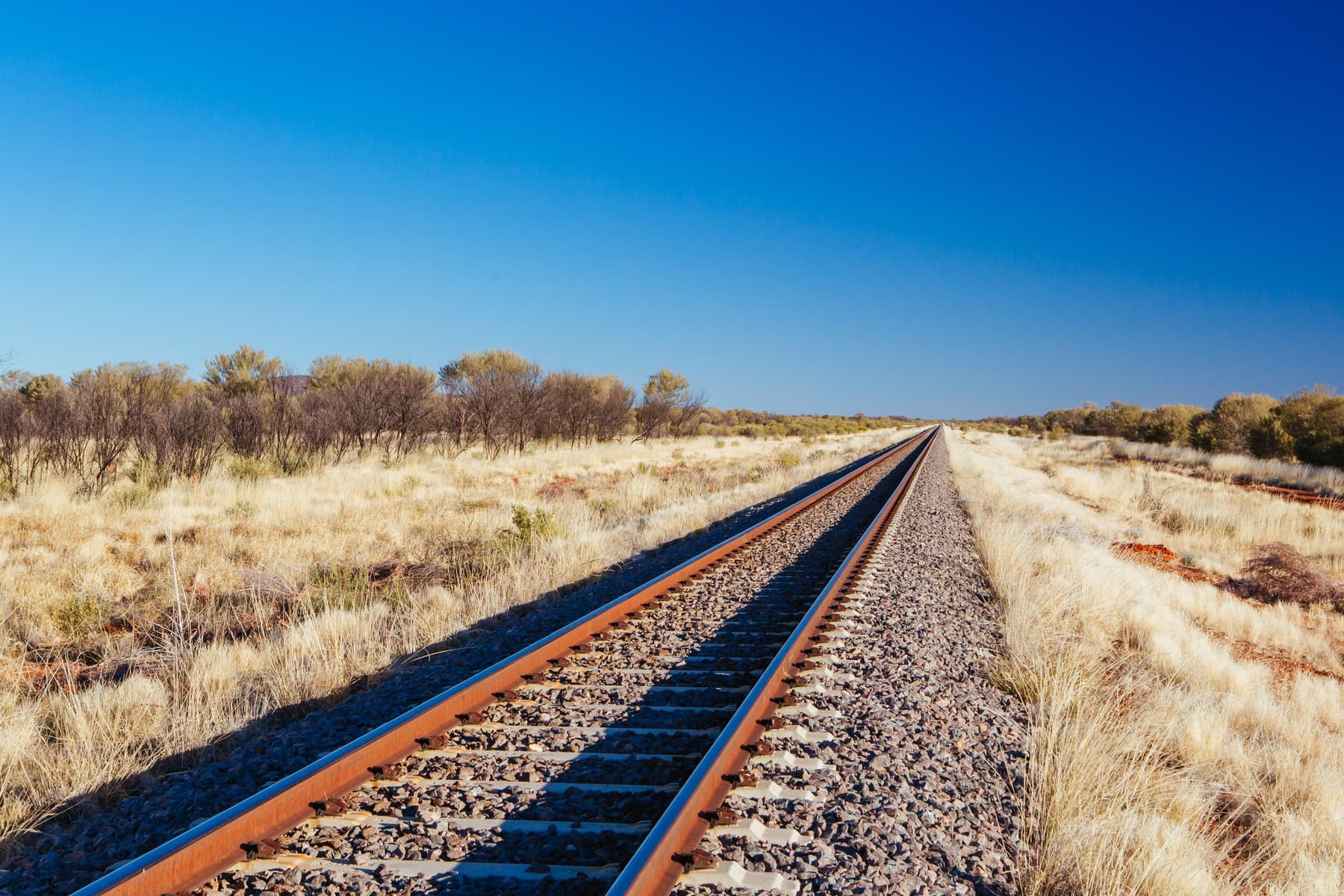
The legend. 2,979 km from the tropical north to the temperate south, right through the red centre of Australia. The train is named after the Afghan cameleers who opened these tracks in the 19th century. Today it carries its passengers through one of the last great empty spaces on the planet, with sunsets that last an hour.
On board. The Expedition version takes four days and three nights and heads south with stops at Katherine (the Nitmiluk gorges, by boat or helicopter), Alice Springs (an optional flight over Uluru) and Coober Pedy, the opal town where people live underground. Dinner under the outback stars included. In Gold, everything is covered: cabin, meals, wines, excursions.
Good to know
Duration: 4 days / 3 nights in the Darwin – Adelaide direction (Expedition), 3 days / 2 nights the other way.
Season: March to November, departures on Wednesday and Saturday.
Indicative price: Gold Twin from AU$4,190 per person at the early fare (March and November 2027), AU$5,390 in the depths of the southern winter (May to August), all inclusive.
Which class: Gold Twin, a cabin for two whose sofa becomes two bunk beds, private bathroom, meals, drinks and excursions included. Gold Single shares the facilities; Platinum doubles the floor space, with a real double bed and breakfast in the cabin, at a much higher fare.
6. Hiram Bingham, Cusco – Machu Picchu
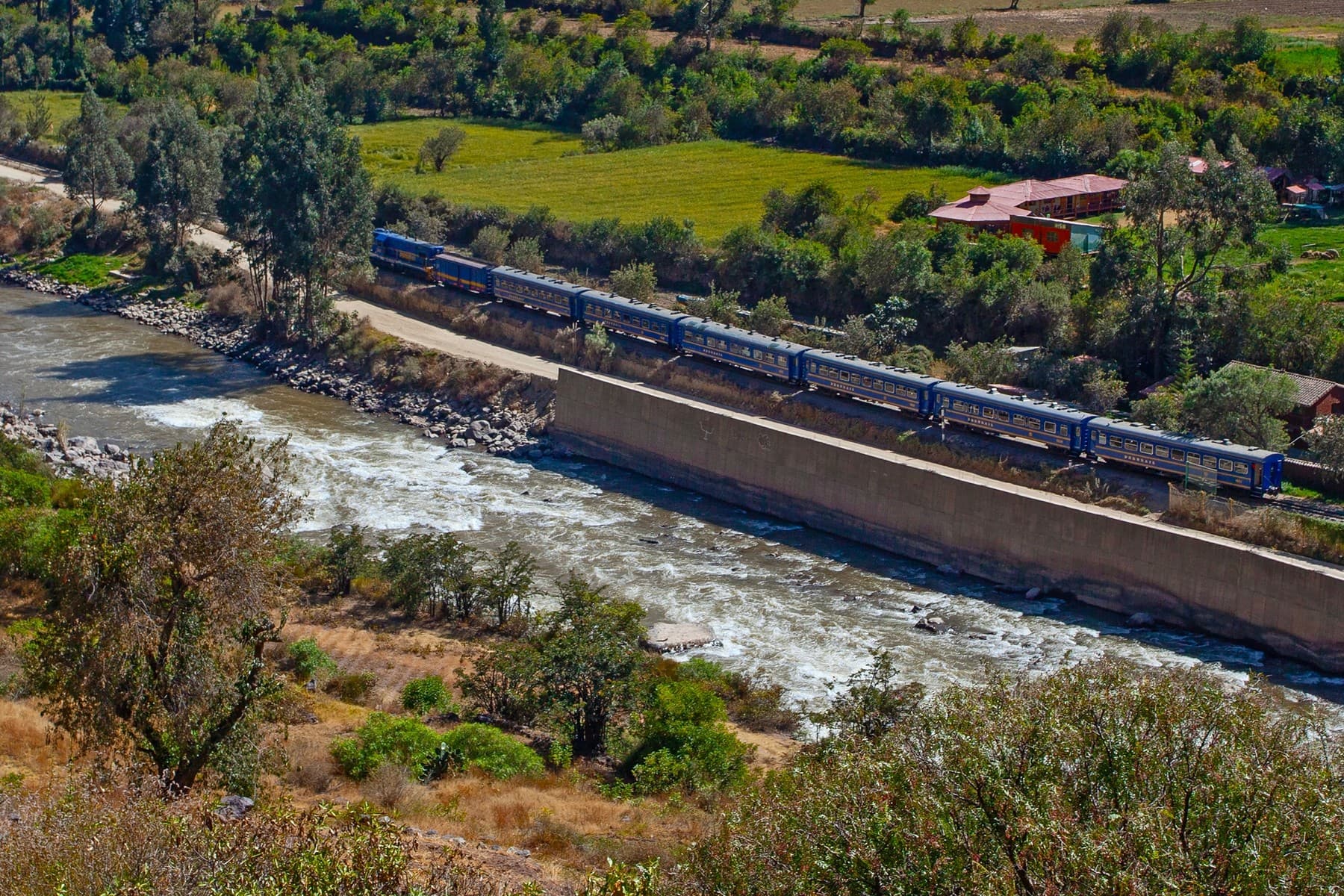
The legend. It bears the name of the explorer who revealed Machu Picchu to the world in 1911, and it climbs there the way he did, up the Urubamba valley. Blue and gold Pullman cars, brass, live music, cocktails in the bar car with its balconies open over the river. Three hours during which the valley tightens and the jungle takes over, all the way to Aguas Calientes.
On board. A light lunch on the way up, a gourmet dinner on the way back, Peruvian wines. The ticket includes the private shuttle between the station and the entrance to the citadel, and a bilingual guide subject to availability. One detail that matters: the entrance ticket to Machu Picchu is not included. It is booked separately, early, with the Peruvian Ministry of Culture.
Good to know
Duration: about 3 hours from Poroy (Cusco) or the Sacred Valley (Ollantaytambo, Rio Sagrado), out in the morning and back in the evening.
Season: April to October, the dry season. The site limits daily entries.
Indicative price: count on US$500 to 650 per person one way depending on the date (dynamic pricing), about US$1,000 return.
Which class: just one, and it is the finest: a bar car with musicians, an open observation car at the rear, brunch on the way out and dinner on the way back included. If the budget says no, PeruRail’s Vistadome, cheaper, follows exactly the same valley with windows up to the roof.
Book: belmond.com, Hiram Bingham · site entry: tuboleto.cultura.pe
7. Trans-Siberian, Moscow – Vladivostok
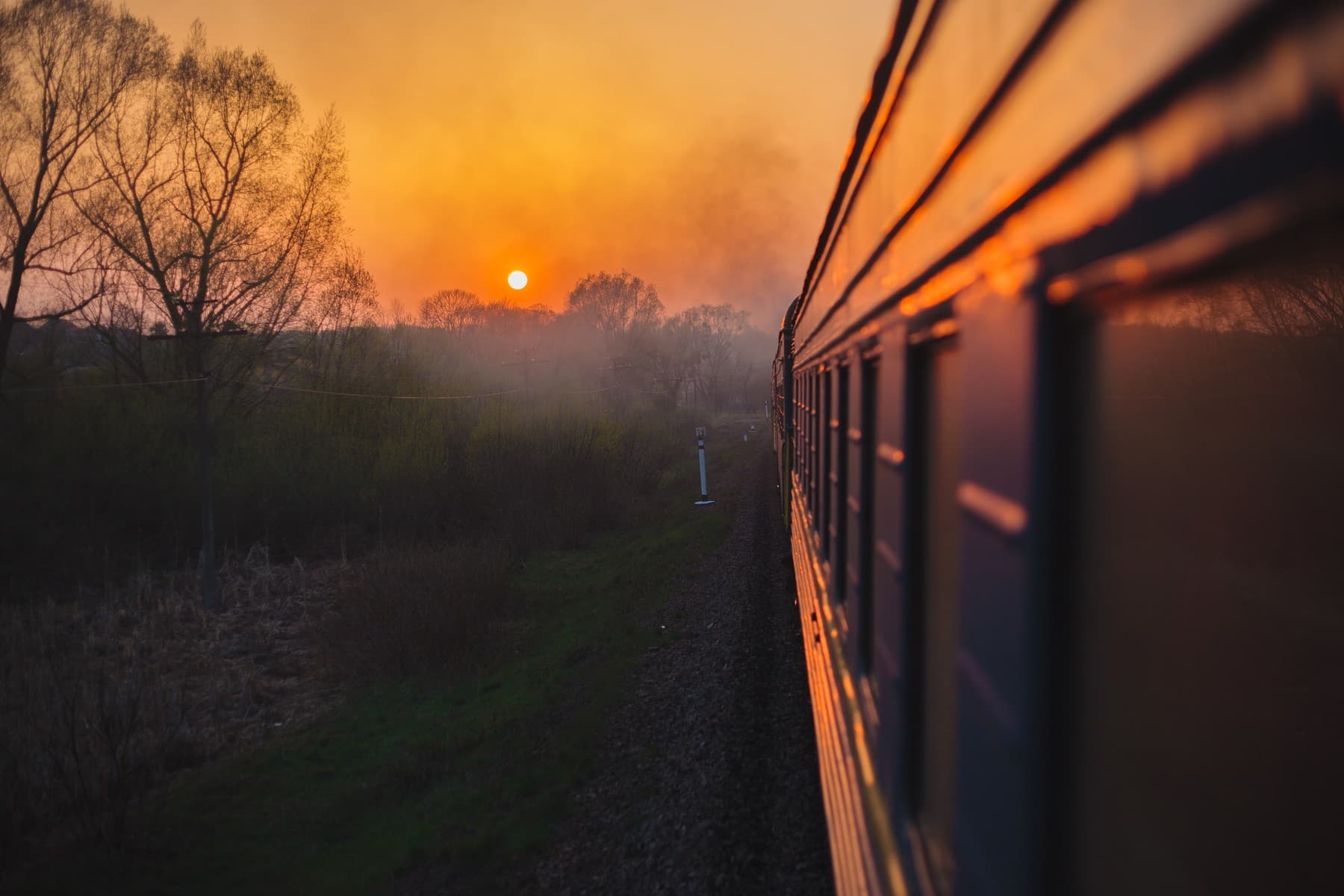
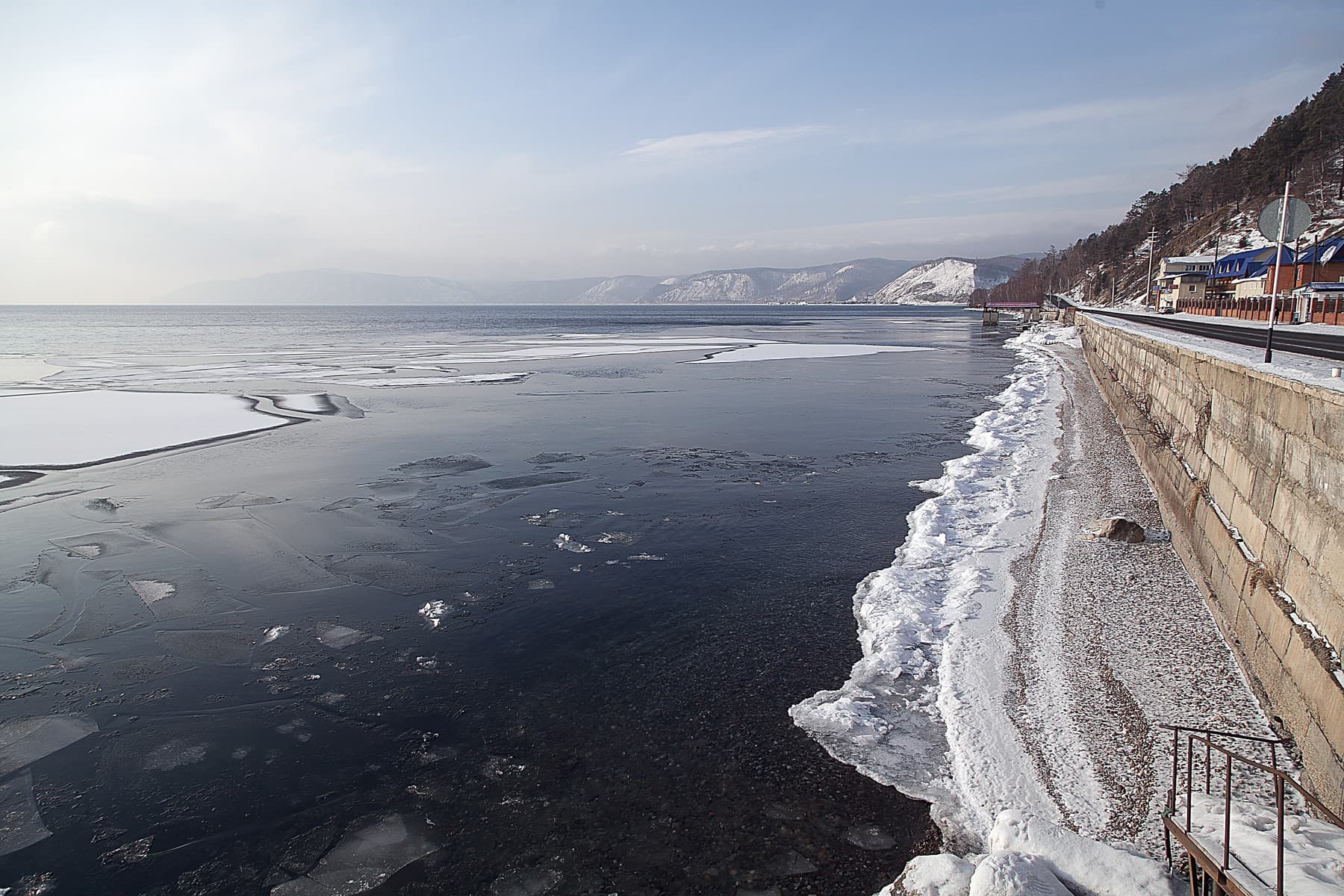
The legend. The longest railway line in the world: 9,288 km, eight time zones crossed, seven hours’ difference between the two ends. Completed in 1916, it stitched Russia together from one ocean to the other. The Rossiya train, numbers 001 and 002, makes the journey in one go in six days, with Lake Baikal, the deepest on the globe, as the reward halfway.
On board. No rolling palace here, but the real life of the Russian railway: four-berth compartments (kupe) or two-berth ones (SV), a provodnitsa who looks after her car and the samovar, a restaurant car, stops of a few minutes to half an hour where you step down to breathe on the platform. The stages are whole cities: Yekaterinburg on the border of Europe and Asia, Novosibirsk, Krasnoyarsk, Irkutsk and Baikal, Ulan-Ude, Khabarovsk. Many break the journey into two or three, and that is the right idea.
Good to know
Duration: about 144 hours in one go, that is six nights; count on two to three weeks with stopovers.
Season: May to September for the long days; winter for the frozen Baikal and the overheated carriages.
Indicative price: from about €240 per person for Moscow – Vladivostok in the cheapest class (platskart) with an online agency, checked on 2 November 2026; count on more in kupe, and about double the kupe fare in a two-berth compartment (SV). Prices are dynamic.
Which class: not platskart, an open dormitory of 54 berths, except for the experience and the budget. Kupe, a lockable four-berth compartment with bedding provided, is the right choice; as a couple, buy all four berths and the compartment is yours. SV has only two berths, for about double. No shower in most cars: the city stopovers serve that purpose too.
Book: the official site rzd.ru is no longer reachable from Western Europe, and Visa and Mastercard cards issued outside Russia no longer work there; you have to go through a specialist agency, for example russiantrain.com.
Safety: France currently advises against all travel to Russia (France Diplomatie, sheet updated 16 October 2026), and the British and American governments say the same. Plan it, and book when official advice allows.
To picture it: Routard’s report, from Moscow to Beijing · seat61.com, Trans-Siberian Railway
8. The Jacobite, Fort William – Mallaig
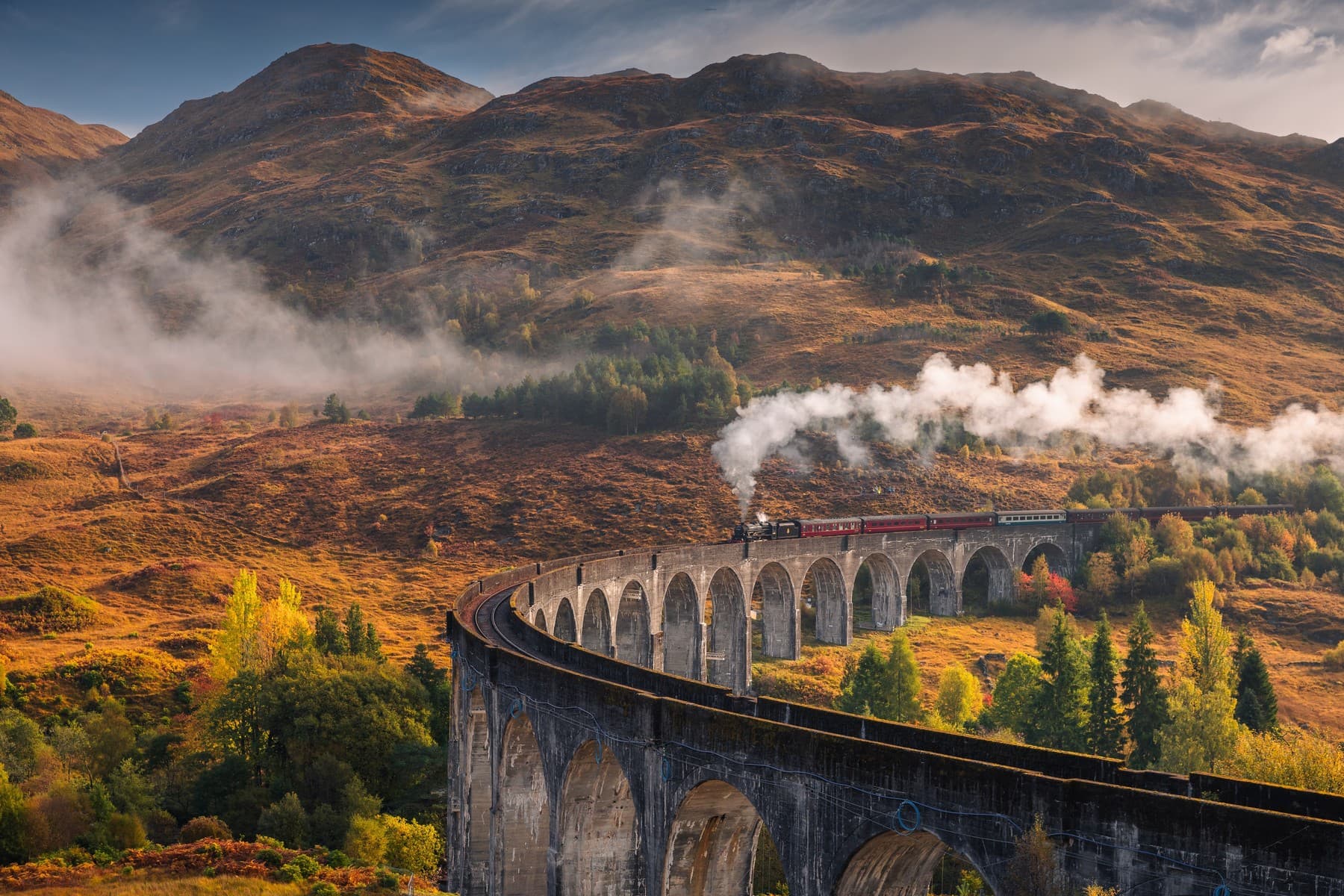
The legend. A steam locomotive, vintage carriages, and the Glenfinnan Viaduct, 21 concrete arches curving above Loch Shiel since 1901. You have already seen it: it is the Hogwarts Express bridge. The train leaves from the foot of Ben Nevis, follows lochs and the white-sand beaches of Morar, and ends at Mallaig, a fishing port facing the Isle of Skye.
On board. 84 miles there and back, 135 km, in a day. In the morning you board at Fort William, you have fish and chips for lunch in Mallaig, you come back the same way in the afternoon light. In summer, a second afternoon departure is added to the first.
Good to know
Duration: one day, about 2 hours each way.
Season: the 2026 season ran from 1 June to 23 October. The company announces 2027 dates and fares “soon”; summer departures sell out weeks in advance.
Indicative price: £76 return per adult in standard class in 2026 (£43 per child), more in first.
Which class: First, with wider seats, tables and more calm, sells out months ahead. Standard, in a compartment or a classic carriage, is plenty for two hours of scenery each way: it is the window that counts, not the seat.
9. California Zephyr, Chicago – San Francisco
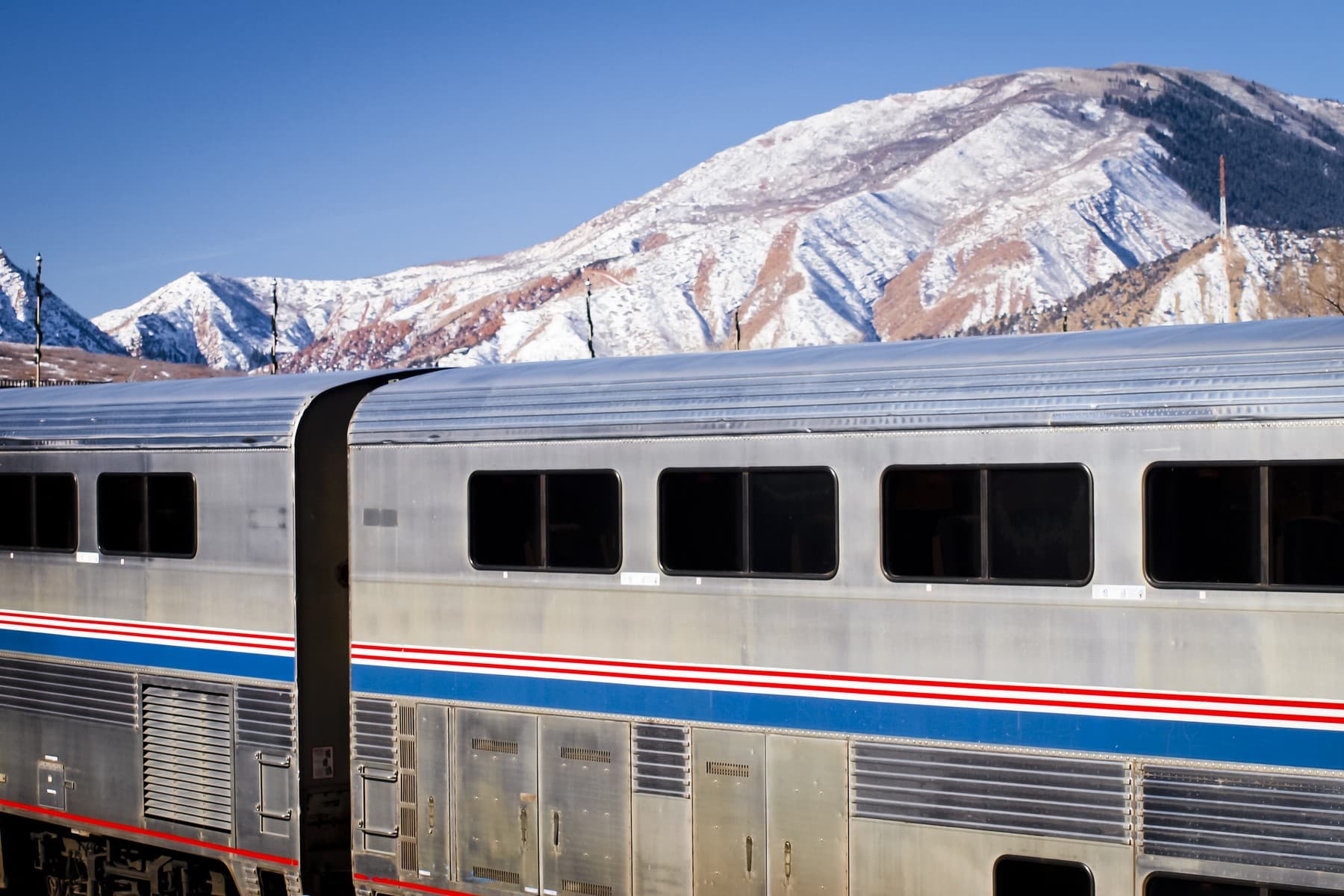
The legend. The most beautiful of the great American trains, and one of the cheapest on this list. 3,924 km and 51 hours across seven states: the plains of Iowa, then Denver, the climb into the Rockies and the Moffat Tunnel (10 km under the Continental Divide), the canyons of Colorado, the Utah desert, and finally the Sierra Nevada over Donner Pass before San Francisco Bay.
On board. Everyone ends up in the Sightseer Lounge, the panoramic car with the big windows, watching the Colorado flow below. In a seat (coach), you sleep reclined with a legrest; in a roomette, a cabin for two, the three meals in the dining car are included. The train leaves Chicago Union Station every day at 2 pm and reaches Emeryville two afternoons later, with an Amtrak shuttle to San Francisco.
Good to know
Duration: 2 nights, 51 h 20 by the timetable.
Season: all year; the snow in the Rockies in winter is worth the detour, summer cabins are booked months ahead.
Indicative price: from about $150 in a seat depending on the date; in a roomette, most often $700 to 1,200 per person, meals included (dynamic fares).
Which class: not the Coach seat for two nights. The Roomette, two armchairs facing each other that become two bunks, toilet and shower at the end of the corridor, all meals included in the dining car, is the right choice; the Bedroom adds a sofa, a washbasin and a private bathroom, for considerably more.
To picture it: Seat61, California Zephyr
10. Shinkansen Nozomi, Tokyo – Kyoto
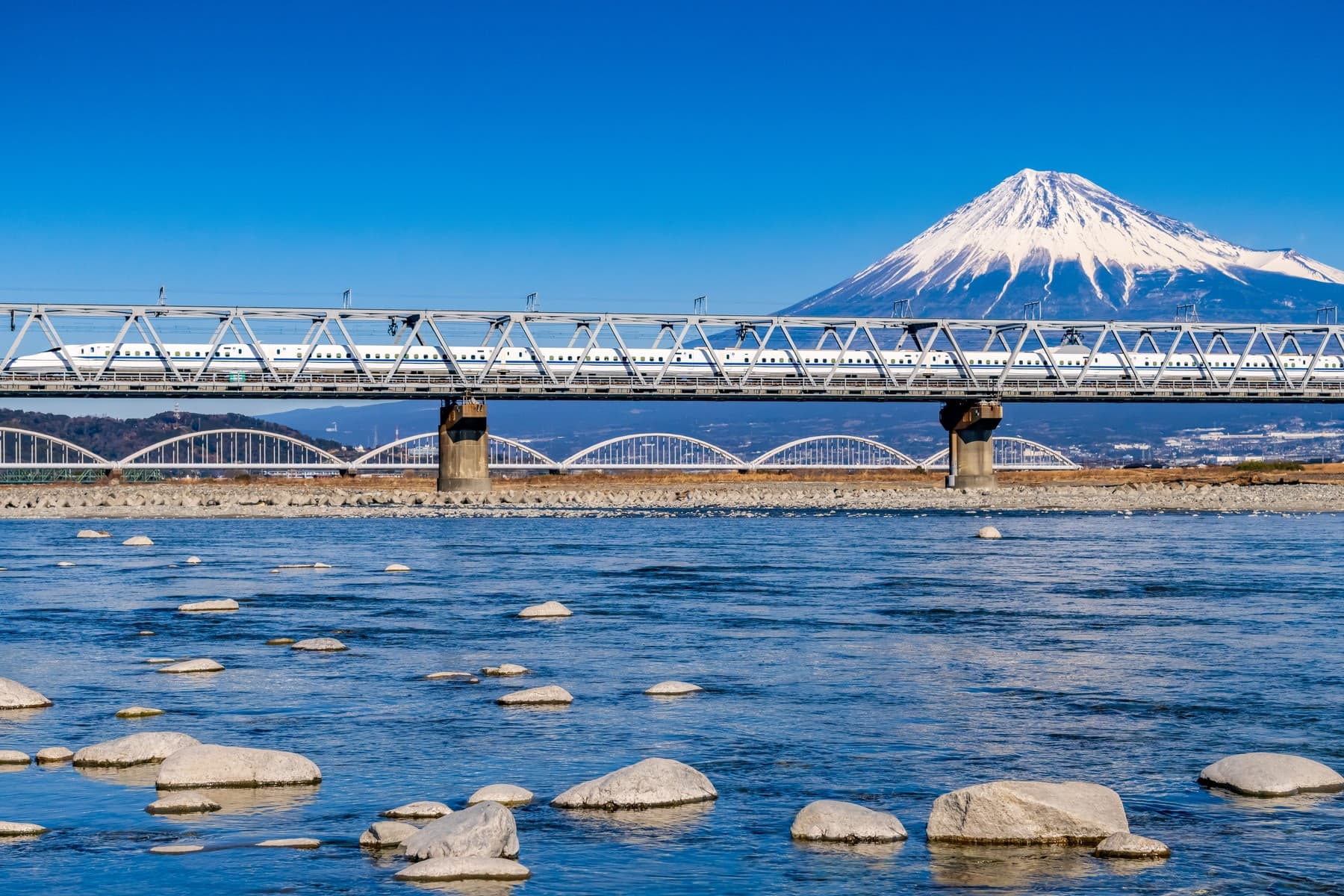
The legend. The world’s first high-speed train, inaugurated in 1964, and still the benchmark for punctuality. A little over 500 km in 2 h 15, a departure every few minutes, a station bento on the tray table and, in clear weather, Mount Fuji appearing on the right about forty minutes after Tokyo. It is not a journey, it is a Japanese rite of passage.
On board. Choose a seat E (right-hand side in the Tokyo – Kyoto direction) for Fuji. The ordinary cars are already more comfortable than a European first class; the Green Car adds width and silence. Buy an ekiben in Tokyo before boarding, that is the tradition.
Good to know
Duration: about 2 h 15 on a Nozomi.
Season: all year; the view of Fuji is more reliable in winter, in dry air.
Indicative price: about ¥14,000 in a reserved seat (¥13,320 unreserved), under €100. With a Japan Rail Pass, the Nozomi requires a ¥4,960 supplement; otherwise take a Hikari, covered by the pass and barely slower.
Which class: a reserved seat in an ordinary car, three-plus-two seating, is enough: it is what lets you pick seat E on the Fuji side. The Green Car, two-plus-two, more legroom and more calm, is Japan’s first class; for 2 h 15, a pleasure, not a necessity.
Book: smart-ex.jp, official booking in English · Japan Guide, Tokyo – Kyoto
Planning your train journey
A legendary train is booked early (summer cabins go months in advance), and it belongs inside a trip: a city before, a city after, hotels, a budget. That is exactly what Evadan helps you lay out: your stages on the map, your tickets in the app, your budget kept day by day. Download Evadan on the App Store or Google Play, and tell us which of these ten trains you will ride first.
Sources (checked on 2 November 2026)
Venice Simplon-Orient-Express: belmond.com, train page · belmond.com, journeys and “from” prices · luxury-trains.co.uk, 2026-2027 fares
The Canadian: viarail.ca, fares by class, summer 2026 and winter 2026-2027 · seat61.com, Toronto – Vancouver
Glacier Express: glacierexpress.ch · glacierexpress.ch, prices · myswitzerland.com, Glacier Express
Rovos Rail: safari.com, Pretoria – Cape Town, fare per person · Daily Maverick, 26 September 2026 · rovos.com
The Ghan: journeybeyondrail.com.au, The Ghan Expedition · journeybeyondrail.com.au, 2027 fares
Hiram Bingham: belmond.com, Hiram Bingham · starsdesk.com, price range · machupicchu.org, transport 2026
Trans-Siberian: russiantrain.com, Trans-Siberian tickets, “from €239.80” Moscow – Vladivostok, 144 h 22 · russiantrain.com, Rossiya train 001/002, 9,288 km · rusmania.com, platskart ≈ 7,000 roubles, SV ≈ double the kupe · seat61.com, Trans-Siberian, 2026 note: rzd.ru geo-blocked, travel inadvisable · travelarbitrage.net, verified 1 October 2026: cards issued outside Russia do not work there · Le Matin, March 2022, Visa and Mastercard suspend operations in Russia · diplomatie.gouv.fr, Russia, safety
The Jacobite: westcoastrailways.co.uk · jacobitetrail.co.uk, 2026 tickets · European Rail Timetable, news of 8 June 2026
California Zephyr: amtrak.com · seat61.com, California Zephyr · amtrakguide.com, Chicago – San Francisco
Shinkansen: japan-guide.com, Tokyo – Kyoto · jr-central.co.jp, Nozomi supplement with the Japan Rail Pass · smart-ex.jp
Written by
Alexandre, fondateur d’Evadan
Alexandre has always planned his own trips, country by country, address by address. His Google Maps lists were shared by thousands of people: Evadan is the finished version.